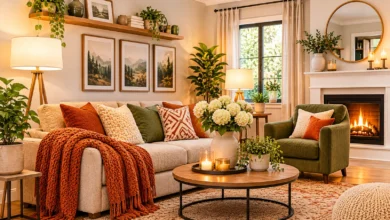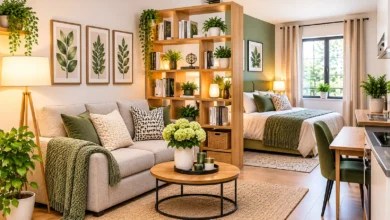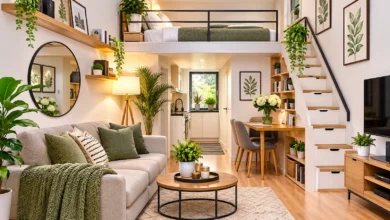
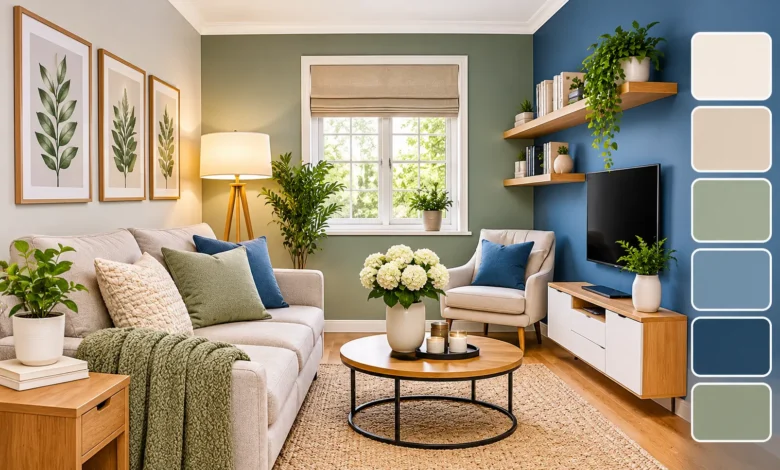
The right paint can change how a small room looks and feels more than almost any other upgrade. The best paint and color ideas for small rooms either bounce light around so the walls feel farther away, or wrap the room in a deep shade so it feels cozy and intentional instead of cramped.
In this guide, you will find 12 paint ideas that work for small bedrooms, living rooms, bathrooms, and home offices. You will also learn how undertones and light reflectance value (LRV) work, how paint finish changes the look of a wall, how to test colors properly, and which mistakes to avoid. If you are planning a bigger refresh, our guide to small space design ideas pairs well with everything below.
The Short Answer: What Color Makes a Small Room Look Bigger?
Light, soft colors such as warm white, cream, pale gray, greige, and muted blue or green usually make a small room look bigger because they reflect more light. A single cohesive color on walls, trim, and ceiling also helps, since it hides the lines where surfaces meet.
That said, bigger is not the only goal. A deep, moody color can make a small room feel rich and cozy. The right choice depends on how you want the room to feel and how much natural light it gets.
How to Choose Paint Colors for a Small Room
Before you look at paint chips, understand the three things that decide how a color will actually look on your walls.
Light Reflectance Value (LRV)
LRV is a number from 0 to 100 that tells you how much light a paint color reflects. Black is close to 0, and pure white is close to 100. Higher LRV colors generally look lighter and brighter in a room.
Paint manufacturers usually list the LRV on the back of the color card or on their website. It is a helpful tool when you are choosing between two similar shades, but it does not replace testing at home.
Undertones in Paint
Undertones are the subtle hints of another color hiding in a paint shade. A gray may have a blue, green, or purple undertone. A white may lean yellow, pink, or gray.
Undertones are the reason a color you loved in the store can look different on your wall. Compare your paint sample against pure white paper and against your flooring, furniture, and fabrics to spot the undertone.
Natural Light and Room Direction
The direction your windows face changes how paint looks throughout the day. These are general guidelines, not strict rules.
- North-facing rooms tend to get cooler, softer light. Warm whites, creamy neutrals, and warmer greens can keep the room from feeling flat or chilly.
- South-facing rooms usually get warm, bright light. They handle cool colors and crisp whites well.
- East-facing rooms often feel bright and warm in the morning, then cooler later in the day.
- West-facing rooms can feel dim in the morning and glow warmly in the evening.
The color you choose will also look different under warm bulbs than under cool daylight bulbs, so check it in the room at several times of day.
12 Stunning Paint and Color Ideas for Small Rooms
1. Soft, Warm White
Quick answer: Yes, white paint can make a small room look bigger, as long as you choose a white with the right undertone for your light.
A soft white reflects plenty of light and gives the room a clean, calm backdrop. Stark, bright white can feel cold or clinical, especially in a north-facing room, so many people prefer an off-white or creamy white with a hint of warmth.
Soft white is a safe, flexible choice for renters and anyone who plans to change decor often. It works with almost any furniture color.
Tips for using soft white:
- Compare two or three whites side by side on the wall, since the differences are subtle.
- Add warmth with wood tones, linen, and brass or black accents.
- Use a slightly different white on trim, or the same one for a seamless look.
2. Greige and Light Neutral Shades
Greige is a mix of gray and beige, and it is popular because it sits between warm and cool. It feels softer than pure gray and less yellow than some beiges.
Neutral paint colors in a light greige keep a small living room or bedroom feeling open without looking stark. They also make it easy to change accessories later.
Be careful with undertones. Some greiges lean pink or green in certain light. Always test a large sample before you commit.
3. Pale Gray With the Right Undertone
Pale gray paint can look sleek and modern, but it can also turn cold or dull if the undertone does not suit your room. A very light gray with a slightly warm base often works best in rooms with limited sunlight.
In a bright south-facing room, a cooler pale gray can look crisp and airy. If your room has a lot of cool daylight, pair pale gray with warm textiles so it does not feel flat.
4. Sage Green and Soft Green Tones
Sage green paint has become a favorite for small bedrooms, bathrooms, and home offices. It feels calm and natural without being as stark as white.
A lighter, grayed-out sage keeps walls feeling open. A deeper green can make the room cozy and a little dramatic. Our readers who love small room green paint ideas often pair sage with warm wood furniture and white bedding.
Green also looks good with plants, which fits well in compact spaces.
5. Dusty Blue and Misty Blue
Dusty blue paint is a soft, muted shade that can make walls seem to recede. It is a good choice for small bedrooms and bathrooms because it feels restful and airy.
Pale, grayed blues generally work better than bright, saturated ones in a tight room. Pair dusty blue with warm white trim, natural wood, and brass or black accents for a balanced look.
In a very dim, north-facing room, blue can feel cold. Choose a blue with a bit of gray or green in it, or add warm lighting.
6. A Monochromatic Color Scheme
A monochromatic color scheme uses different shades and tints of a single color throughout the room. For example, you might use pale sage on the walls, a slightly deeper sage on a cabinet, and a lighter tint on the trim.
This approach keeps the room cohesive and avoids visual breaks that make a small space look busy. It also lets you add depth without adding a new color.
How to build a monochromatic palette:
- Pick one main color for the walls.
- Choose one lighter and one darker shade of the same color.
- Use the lighter shade for trim or ceilings and the darker shade for details like a door or shelves.
- Add texture through fabrics, wood, and metal, so the room does not feel flat.
7. Color Drenching
Color drenching means painting the walls, trim, baseboards, doors, and often the ceiling in the same color. It removes the contrast lines that make a room’s edges obvious, which can make the room feel more seamless and sometimes larger.
It works with light colors and dark colors. A drenched pale blue room feels airy, while a drenched deep green room feels like a cozy jewel box.
How to use color drenching in a small room:
- Choose a color you will happily live with, since it covers every surface.
- Use a slightly different sheen on trim (such as satin) and walls (such as matte or eggshell) for subtle depth.
- Keep furniture and decor simple so the color is the main feature.
- Use good lighting so a deeper color does not feel gloomy at night.
8. Deep, Moody Colors for Cozy Rooms
Quick answer: Yes, dark colors can work in small rooms. They will not make the room look larger, but they can make it feel cozy, rich, and designed.
Small room dark paint ideas work especially well in bedrooms, powder rooms, dens, and reading nooks, where you want a wrapped-in feeling. Deep navy, forest green, charcoal, and dark teal are popular choices.
Dark colors work best when you commit. Painting the walls, trim, and ceiling the same shade avoids the choppy look of mixed colors. Add layered lighting, a mirror, and a few light accents so the room has contrast.
Be cautious in rooms with no natural light. Dark paint will absorb what little light there is, so plan on plenty of lamps, sconces, and warm bulbs.
9. Two-Tone Walls
Small room two tone paint ideas can add interest without cutting the room in half the wrong way. The most common version is a darker color on the lower part of the wall and a lighter color above, divided by a chair rail, picture rail, or a clean painted line.
How to paint a small room two colors:
- Decide where the dividing line goes. Many people choose around one-third to half the wall height.
- Use a level and painter’s tape for a crisp edge.
- Paint the lighter color first, let it dry fully, then tape and paint the darker color.
- Remove the tape while the paint is still slightly tacky for the cleanest edge.
Keep the lighter color on the upper wall so the room still feels open, and consider a higher dividing line to draw the eye up.
10. An Accent Wall That Actually Works
An accent wall can add personality, but it works best when it has a reason to exist. Choose the wall your eye naturally goes to, such as the wall behind the bed, the sofa, or a fireplace.
How to use accent walls in small rooms:
- Pick a wall without many windows or doors, so the color has room to show.
- Choose an accent shade that relates to the other colors in the room, rather than a random bright color.
- Avoid painting a wall where furniture will cover most of it.
- In a narrow room, painting a short end wall a deeper color can make the room feel less like a tunnel.
If you are not sure about an accent wall, a large piece of art on a light wall may do the same job with less commitment.
For more bedroom ideas to go with your new color, see our guide to [INTERNAL LINK 2: anchor text “cozy bedroom decor ideas” → your bedroom or cozy home decor category/article].
11. Pay Attention to the Ceiling
Quick answer: Painting the ceiling the same color as the walls can blur the boundary and make the room feel cohesive. A lighter ceiling can make it feel higher.
The ceiling is often an afterthought, but it is a big surface. Many people use a flat white ceiling paint by default, which is a clean and reliable choice.
Here is how the options compare:
| Ceiling option | Effect | Best for |
|---|---|---|
| Bright white | Reflects light, keeps things airy | Most small rooms, rooms with low ceilings |
| Same color as walls | Seamless, cozy, wraps the room | Bedrooms, dens, color drenching |
| Slightly lighter tint of wall color | Soft, subtle contrast | Rooms where you want softness without stark white |
| Pale blue or soft color | Airy, a bit playful | Porches, nurseries, bathrooms |
To make a room look taller, keep the ceiling lighter than the walls and avoid heavy contrasts at the top of the wall. Painting a ceiling a dark color can make it feel lower, which may be what you want in a cozy bedroom but not in a room with low ceilings you want to open up.
12. Warm Blush, Terracotta, and Soft Yellow for Coziness
What colors make a small room feel cozy? Warm tones such as soft blush, clay, terracotta, honey, and creamy yellow create a welcoming feel. They are especially helpful in rooms that get little warm sunlight.
Keep these colors muted and softened rather than bright. Muted warm shades feel cozy, while very bright ones can feel loud in a compact room.
Warm colors work well in small dining rooms, entryways, and reading corners. Pair them with natural materials such as wood, rattan, and linen.
Paint Finish: Which Sheen Is Best for Small Rooms?
Quick answer: Matte or eggshell works well for most small room walls. Satin or semi-gloss is better for trim, doors, kitchens, and bathrooms, where you need durability and easy cleaning.
Paint sheen, also called finish, changes how a color looks and how well the wall holds up. Higher sheen reflects more light and shows more imperfections.
| Finish | Look | Best for |
|---|---|---|
| Flat/matte | No shine, hides wall flaws well | Ceilings, low-traffic walls, bedrooms |
| Eggshell | Soft glow, slightly more washable | Living rooms, bedrooms, hallways |
| Satin | Smooth, subtle sheen, more durable | Kids’ rooms, kitchens, bathrooms, trim |
| Semi-gloss | Shiny, very durable | Trim, doors, cabinets, baseboards |
In small rooms, very glossy walls can highlight bumps and uneven surfaces, so reserve high sheens for trim and doors. If you want a deep color to feel soft and rich, matte or eggshell is often the most flattering.
Always check the manufacturer’s product information for washability and recommended uses, since formulas vary by brand.
Room-by-Room Paint Ideas for Small Spaces
Small Bedroom Paint Colors
What is the best color for a small bedroom? Soft, restful colors such as warm white, pale sage, dusty blue, and greige are popular because they feel calming. A deep navy or green can also work if you want a cozy retreat.
For couples, choose a neutral or muted shade that both people like, and add personality with bedding and art. If you are on a budget, painting just the wall behind the bed can change the feel of the room for the cost of one can of paint.
Small Living Room Paint Colors
Light neutrals, soft greens, and pale blue-grays keep small living rooms open. If you have dark furniture, a mid-tone or light wall color gives it contrast, while a very dark wall can make dark furniture disappear into the room, which some people love and others do not.
Tie the wall color to what already exists in the room: the sofa, rug, wood floors, or art. That makes the room feel pulled together.
Small Bathroom Paint Colors
What is the best paint color for a small bathroom with no window? Light, warm colors help, but dark colors can also work if you add good lighting. A pale, warm white or soft sage keeps things fresh, while a deep green or navy makes a windowless bathroom feel like an intentional, spa-like space.
Use a moisture-resistant paint made for bathrooms, and make sure the room has proper ventilation.
Small Kitchen, Dining Room, and Entryway Colors
In a small kitchen, light neutrals and soft greens keep the room feeling clean. Satin or semi-gloss on cabinets and trim makes cleaning easier. A small dining room can handle bolder color since you use it for shorter periods. Warm terracotta or deep green can make dinners feel special.
Entryways are a great place for a confident color because people only pass through. Pick a color that sets the tone for the rest of the home.
Small Home Office and Nursery
For a small home office, soft greens, blues, and warm neutrals support focus without feeling dull. For a small nursery, soft whites, pale sage, gentle blush, and misty blue create a calm backdrop. Look for low-VOC or zero-VOC paint options if you are painting a nursery or a poorly ventilated room, and follow the manufacturer’s directions for drying and ventilation time.
What Is the Best Paint Color for a Small Room With No Natural Light?
In a room with no windows, avoid colors that rely on daylight to look good. Cool grays and pale blues can look flat or gloomy under artificial light.
Here are two strategies that work:
- Go light and warm. Warm whites, creamy neutrals, and soft yellows add brightness. Use warm-toned bulbs and test the color under the room’s real lighting.
- Go deep and embrace it. Rich greens, navy, and charcoal can make a windowless room feel like a cozy retreat when paired with layered lamps, sconces, and a mirror.
Either way, light the room well. Paint and lighting work as a team.
How to Test Paint Colors Before You Commit
Testing is the most important step, and it is the one people skip most often. Follow these steps.
- Narrow it down. Pick two or three colors at most.
- Use large samples. Paint sample boards or large patches about two feet square, or use peel-and-stick sample sheets.
- Move them around. Check each sample on different walls, since the light changes from wall to wall.
- Check different times. Look in morning, afternoon, and evening, and under your lamps at night.
- View them next to your furniture. Hold the sample against your sofa, bedding, flooring, and curtains.
- Live with them for a few days. First impressions can change.
If you are repainting over a dark or strongly colored wall, you may need a primer or extra coats, so check the paint manufacturer’s guidance.
How to Paint a Small Room: A Quick Guide
- Clear and protect. Move furniture out or to the center and cover it. Lay drop cloths on the floor.
- Clean and repair. Wash the walls, fill holes, and sand rough spots.
- Tape and prime. Tape edges and use primer when needed, especially for stains, patched areas, or big color changes.
- Paint the ceiling first, then the walls, then the trim.
- Cut in the edges with a brush, then roll the walls in a steady pattern.
- Apply two coats and allow the recommended drying time between them.
- Ventilate the room and follow the product label for safe use.
Paint Color Mistakes to Avoid in Small Rooms
- Picking from a tiny chip. Small chips look different from a whole wall. Always test big samples.
- Ignoring undertones. A gray that leans purple or a white that leans yellow can surprise you.
- Forgetting the lighting. Warm and cool bulbs change the color. Test with your real light fixtures.
- Using too many colors. Keep to a cohesive palette so the room does not feel chopped up.
- Choosing high gloss for walls. It highlights flaws and can be harsh in a small room.
- Skipping the ceiling and trim. A stark white ceiling against a deep wall can cut the room visually. Consider the whole room as one composition.
- Following trends blindly. Choose colors you will enjoy living with.
- Painting before decluttering. A tidy room shows color at its best.
Small Room Paint Ideas on a Budget and for Renters
You can refresh a small room without spending much.
- Paint one wall or one piece of furniture instead of the whole room.
- Buy a small sample can and use it for a bookcase, door, or small cabinet.
- Choose a neutral you can use in several rooms and buy a larger can for a better price.
- Skip the trim and ceiling if they are in good condition.
Renters should check the lease before painting. Many landlords allow paint if you return the walls to the original color, and some require written permission. If painting is not allowed, peel-and-stick wallpaper, large art, textiles, and lighting can change a room’s color story without touching the walls. For more ways to make a rental feel personal, see our [INTERNAL LINK 3: anchor text “home decor ideas for renters” → your renter-friendly or apartment decor category/article].
Paint Color Trends for 2026: Should You Follow Them?
Design coverage in recent years has leaned toward earthy greens, warm neutrals, soft blues, and deeper, more saturated colors in small rooms. Treat trends as inspiration, not rules. They change quickly, and paint is more work than swapping a pillow.
A good way to use a trend is in a small dose: a color on a door, a bookcase, a powder room, or an accent wall. If you still love it a year later, you can use it more widely.
Frequently Asked Questions
Should you paint a small room dark or light?
Both can work. Light colors generally make a room feel more open, while dark colors make it feel cozy and enveloping. Choose based on the mood you want and how much natural light the room gets.
Does white paint make a small room look bigger?
Often, yes, because white reflects light. Choose a white with the right undertone for your light, since a stark white can feel cold and a creamy white can feel warm.
Can dark colors work in small rooms?
Yes. Dark colors will not make a room look larger, but they can make it feel cozy and sophisticated. Use the same color on walls, trim, and ceiling, and add layered lighting.
Should you paint the ceiling the same color as the walls?
It can work well, especially in a cozy bedroom or with color drenching. For a room you want to feel taller, a lighter ceiling is usually the better choice.
What paint finish is best for small rooms?
Matte or eggshell works well for most walls, and satin or semi-gloss works for trim, doors, kitchens, and bathrooms. Higher gloss shows more wall imperfections.
What is the best color for a small bedroom?
Soft, restful colors such as warm white, pale sage, dusty blue, and greige are popular. A deep navy or green can also work if you want a cozy retreat.
How do you choose paint color for a small room?
Start with the mood you want, then consider your room’s light and your existing furniture. Check undertones and LRV, test large samples at different times of day, and choose the one that looks best in your real room.
Can I use more than one color in a small room?
Yes. Two-tone walls, an accent wall, or a monochromatic scheme can all work. Keep the colors related and limit the palette so the room still feels cohesive.
Final Thoughts: Choose the Mood, Then Test the Color
The best paint colors for small rooms are the ones that suit your light, your furniture, and the way you want the room to feel. Light, soft shades open a room up, while deep, moody colors make it cozy and intimate. Either approach works when you commit and keep the palette cohesive.
Your next step is simple: pick two or three colors, paint large samples, and live with them for a few days. The right one will usually be obvious.
Looking for more ways to refresh your space? Explore our Home & Living section for decor guides, room makeovers, and practical ideas for every corner of your home.